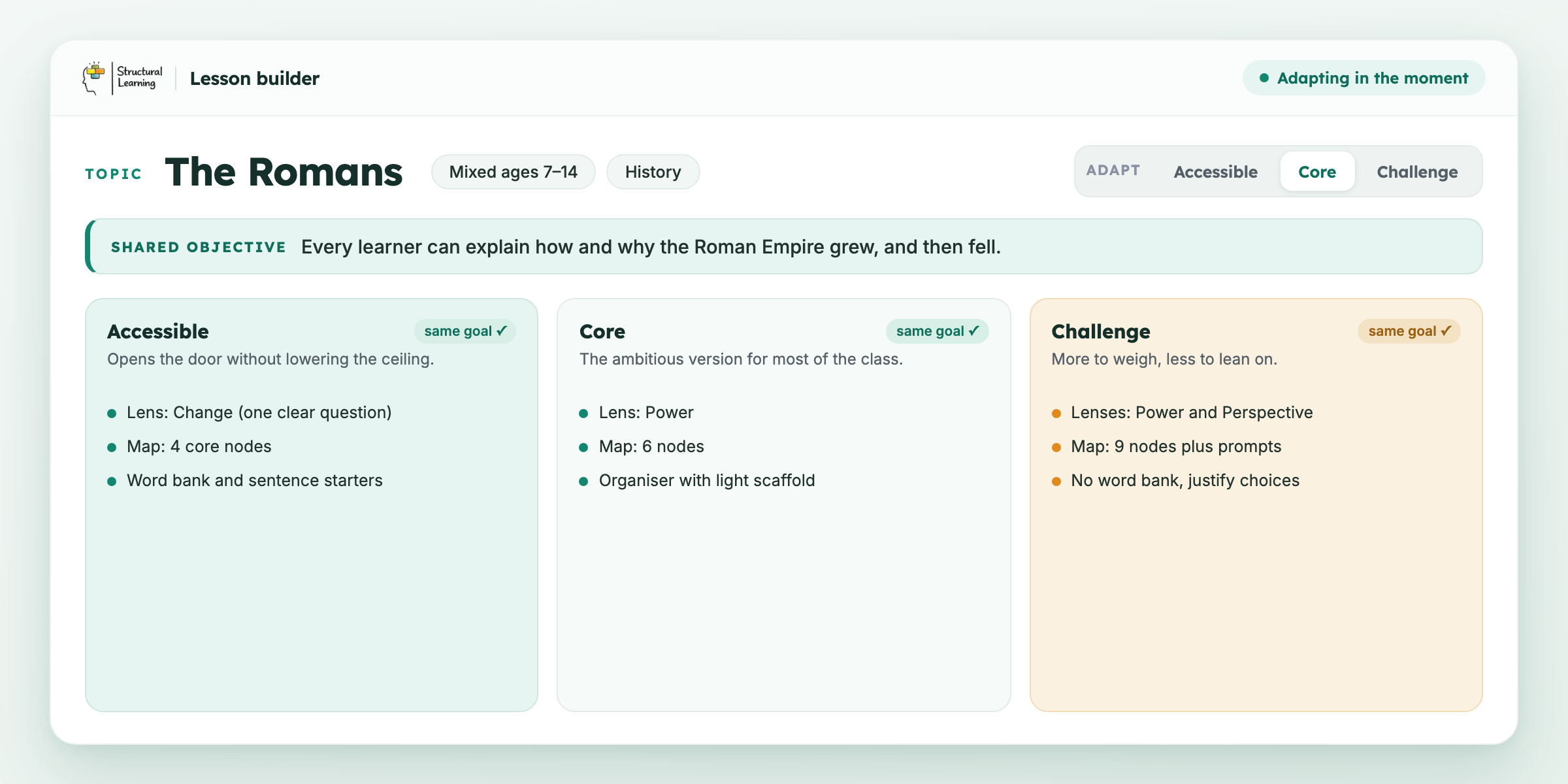
The platform keeps one ambitious objective for the whole class, then lets you adapt the route in the moment: a different conceptual lens, a lighter or blanker graphic organiser, more or less to map. Same topic, same destination, different paths.
A first look at what we are building right now. The adaptive controls below are coming to the platform soon. Here is how they will work.
Every teacher knows the bind. Pitch the lesson high and some learners cannot get in. Pitch it low and the rest coast. The old answer was differentiation: write three versions of the task and hope. Adaptive teaching asks for something better, and harder. Keep one ambitious goal for the whole class, and change the route, not the destination.
This is what we are building right now, almost as you read this. You set the topic and the goal once. Then, in the moment, you adapt how learners get there. Same topic. Same summit. Different paths up the mountain.
One topic, one shared goal, three routes to reach it. Nothing is dumbed down, the ceiling stays high.
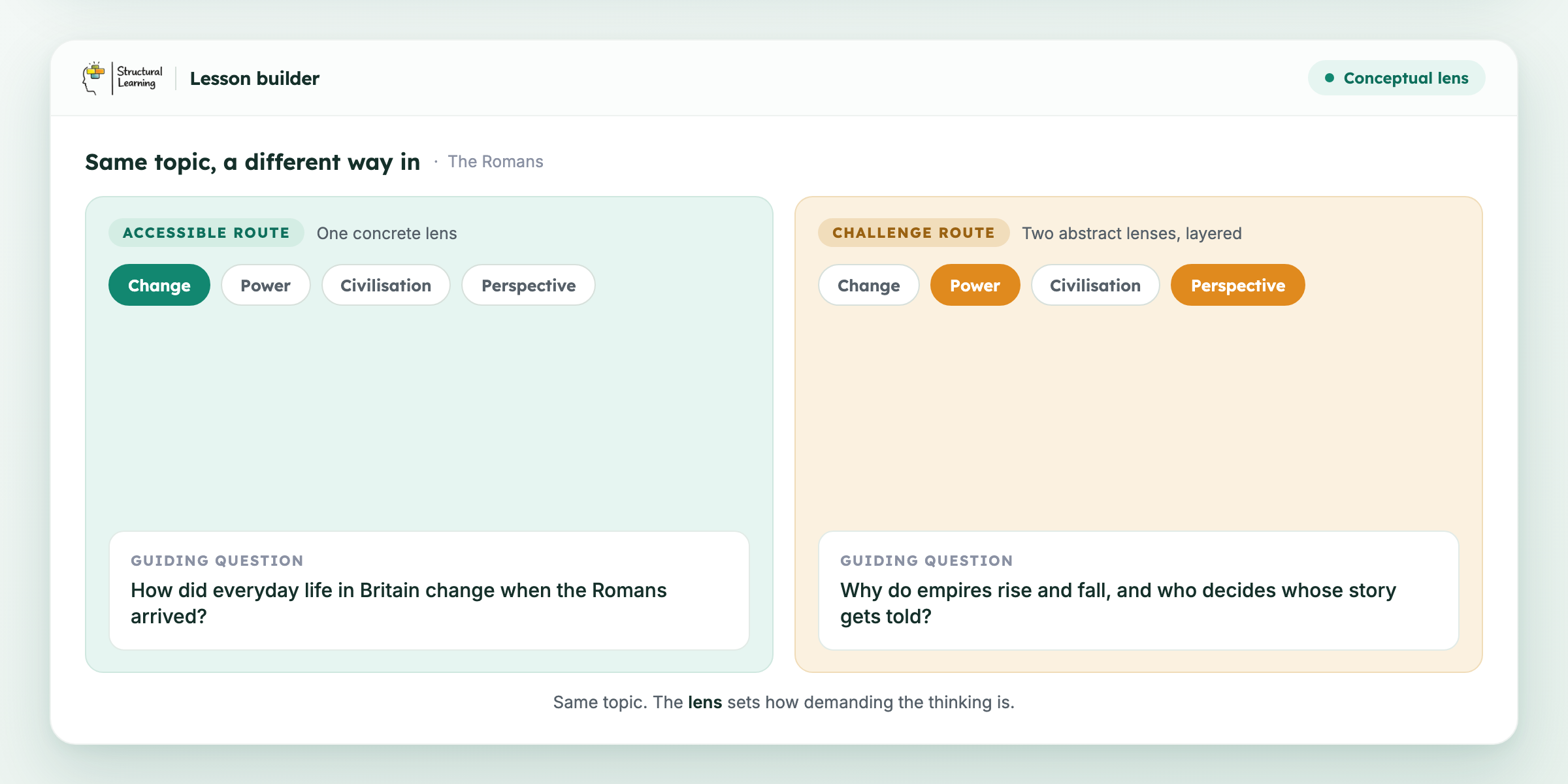
Same topic, a different way in
Start with a conceptual lens. A concrete lens such as Change gives learners a clear, single question to hold on to. A pair of abstract lenses, Power and Perspective, turns the same topic into a harder problem. The Romans stays the Romans. The lens decides how demanding the thinking is.
The same topic through one concrete lens, or two abstract ones layered together.
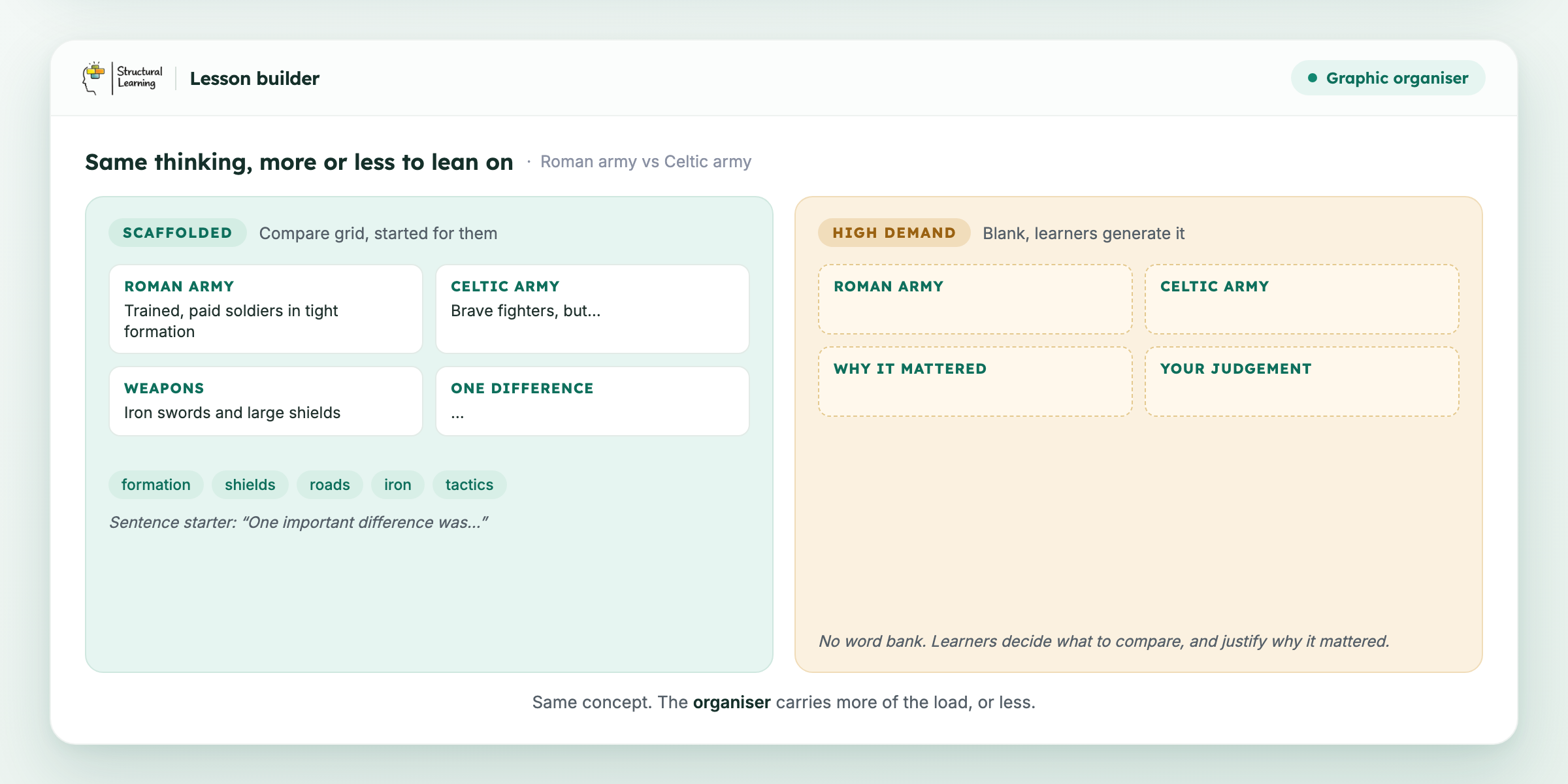
More to lean on, or less
Next, the graphic organiser. For learners who need a way in, the organiser arrives part built: a compare grid started for them, a word bank, a sentence starter. For learners ready to be stretched, the same organiser is blank. They decide what to compare and justify why it matters. The thinking is identical, the support is not.
Same compare task. One organiser carries the load, the other hands it back.
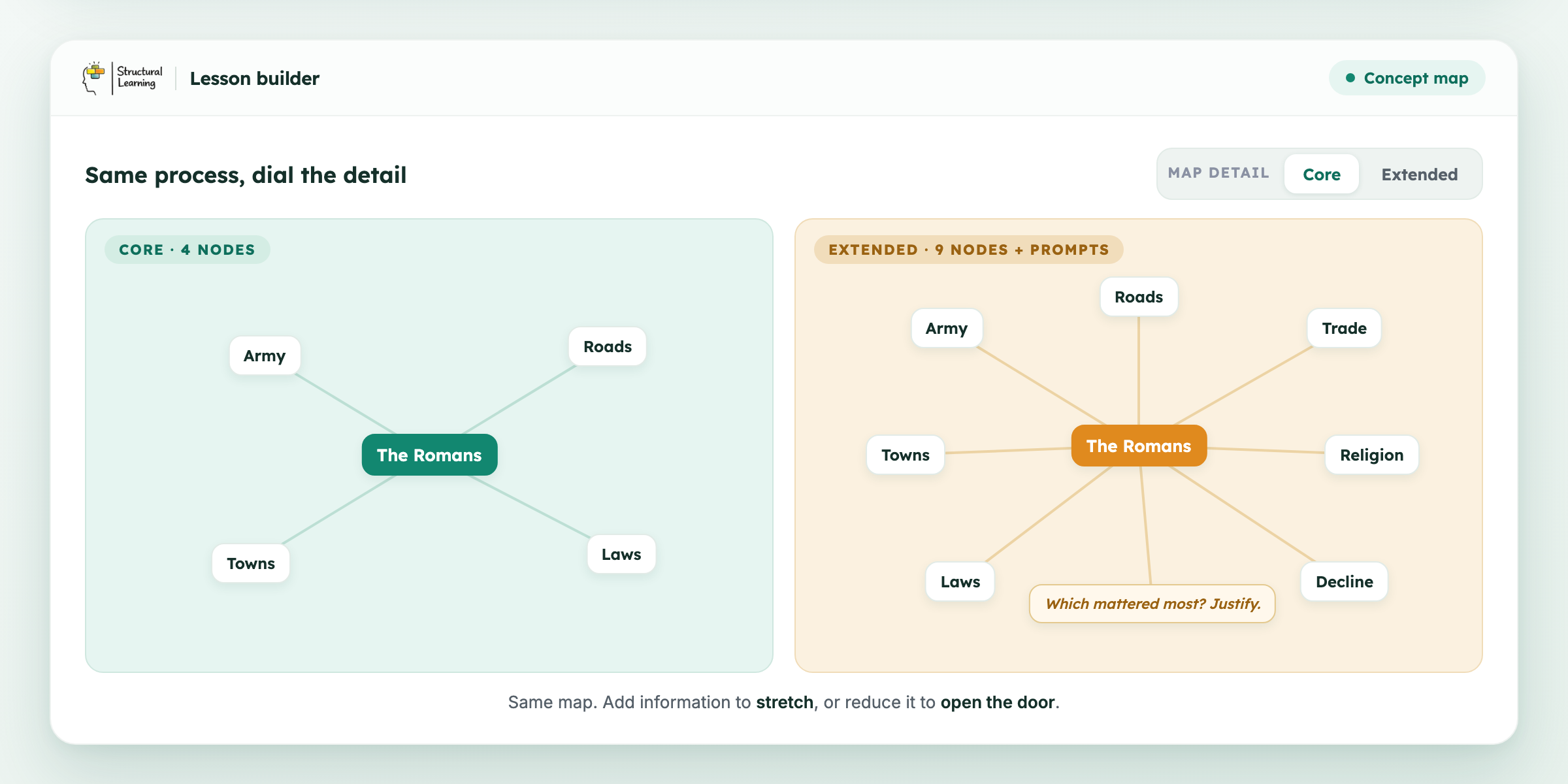
Dial the detail on the map
Then the map. Everyone maps the topic, but you choose how much there is to map. A core map holds four nodes and keeps the load manageable. An extended map adds more nodes and a prompt to weigh them: which mattered most, and why? Same process, more or less to think about.
The same mapping process, set to core or extended in a click.
Built on the Thinking Framework
None of this works without a shared language for thinking. Our Thinking Framework gives every topic five kinds of thinking: getting started, connecting ideas, reinforcing what you know, putting it into words, and using knowledge to judge and create. They are not a ladder. A learner can judge before they categorise. The teacher chooses which thinking the lesson needs, and where each learner goes deep.
The same topic, mapped across five kinds of thinking. The teacher decides where to go deep.
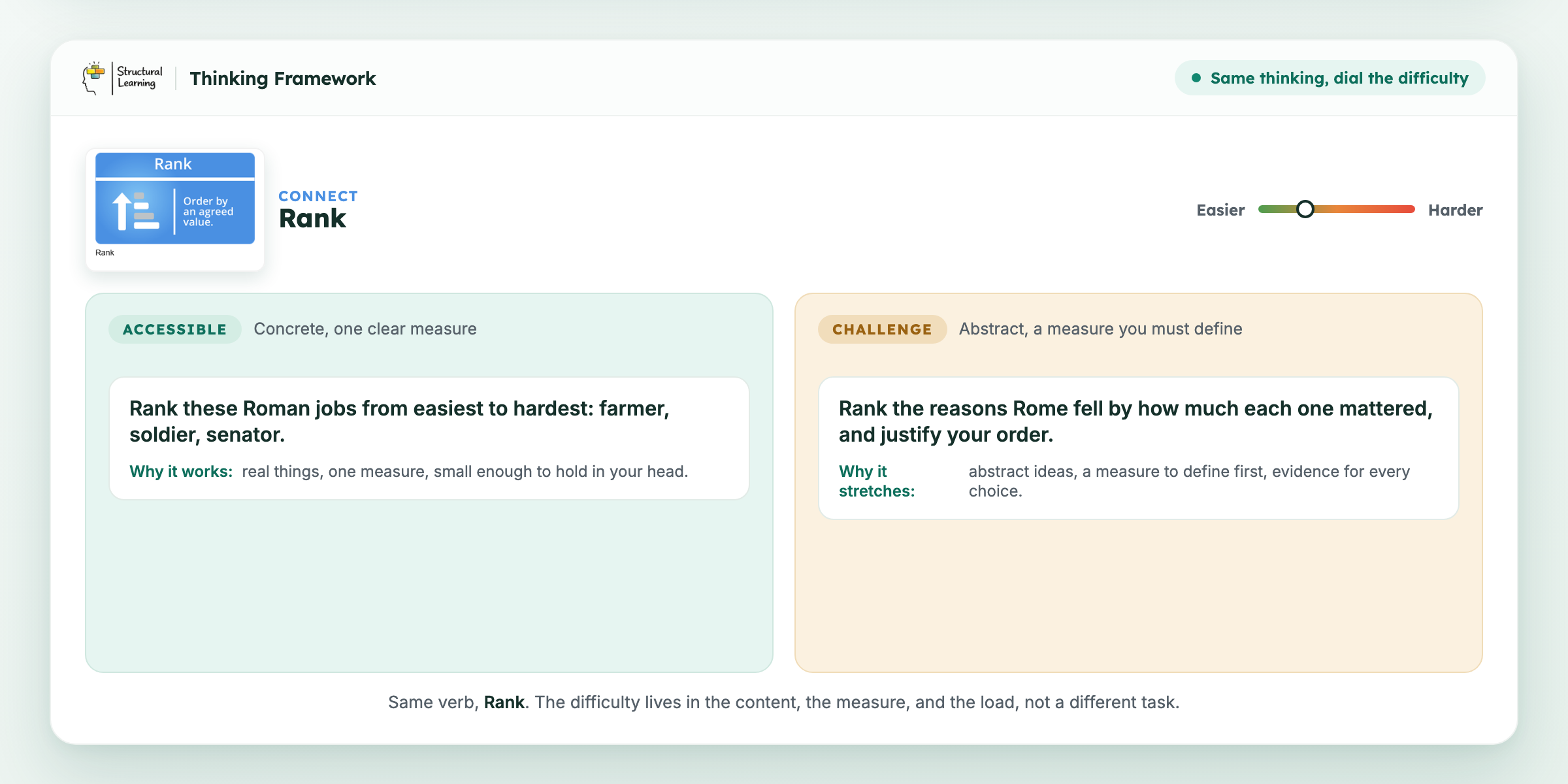
Here is what makes it genuinely adaptive. The same thinking move can be made easier or harder without changing the task. Take rank. Ranking three Roman jobs by difficulty is concrete and quick. Ranking the reasons Rome fell, and justifying the order, is abstract and demanding. Same verb, different difficulty. The difficulty lives in the content, the measure, and the load, so the whole class can stay on the same kind of thinking while each learner works at the right level.
Same thinking move, dialled from accessible to challenging.
Different routes, the same destination
Underneath every control sits one idea. The goal does not move. A learner on the accessible route and a learner on the challenge route are heading for the same understanding, and both can explain how and why the Roman Empire grew and then fell. That is high challenge for every learner, with a route that fits each one, and without planning three separate lessons.
See where the platform is heading
These adaptive controls are coming soon. The platform is free to try today, and we read every piece of feedback on what to build next.