
upper primary teachers, years 5 to 6
Developing
✓ Citations verified
In one real classroom study, ten-year-olds who reviewed new vocabulary a week after first learning it recalled almost three times as many word meanings five weeks later than those who reviewed it again straight away, using exactly the same amount of teaching time.
Sobel, H. S., Cepeda, N. J., & Kapler, I. V. (2011). Spacing effects in real-world classroom vocabulary learning. Applied Cognitive Psychology, 25(5), 763-767.
Free to download and share. No sign-up needed.
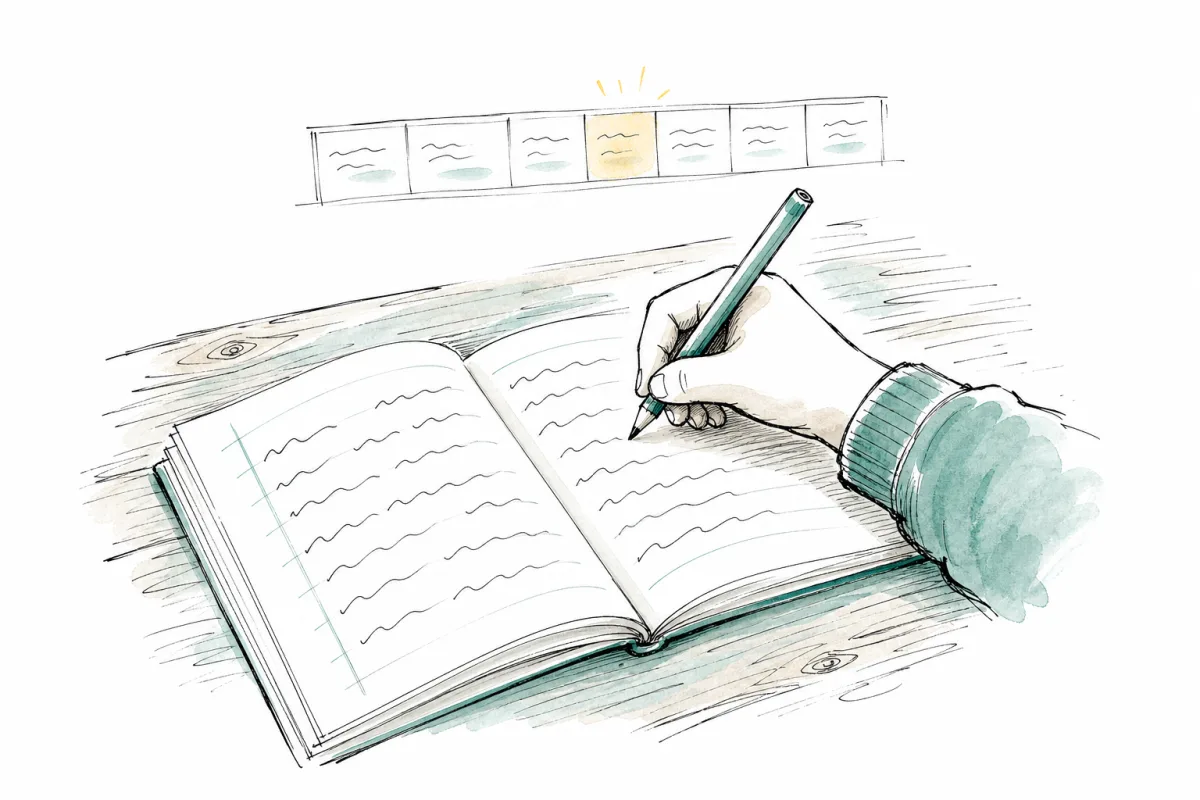
The gist. In one real Canadian classroom study, ten-year-olds who reviewed new vocabulary a week after first learning it recalled almost three times as many word meanings five weeks later than learners who reviewed the same words straight away, using exactly the same amount of teaching time.
In two real Grade 5 classes in Ontario, Canada, the regular classroom teacher taught 39 learners eight new English words. Four words were reviewed again less than a minute after first teaching; the other four were reviewed again a full week later, with exactly the same 10 minutes of formal learning time either way. Five weeks after that second review, learners were tested on all eight definitions.
Learners recalled 20.8% of the spaced words compared with 7.5% of the words reviewed straight away, a statistically reliable difference (p = .004). Both sets of words were equally hard to start with, at around 61% correct straight after first teaching, so the gap was not down to easier words landing in the spaced set.
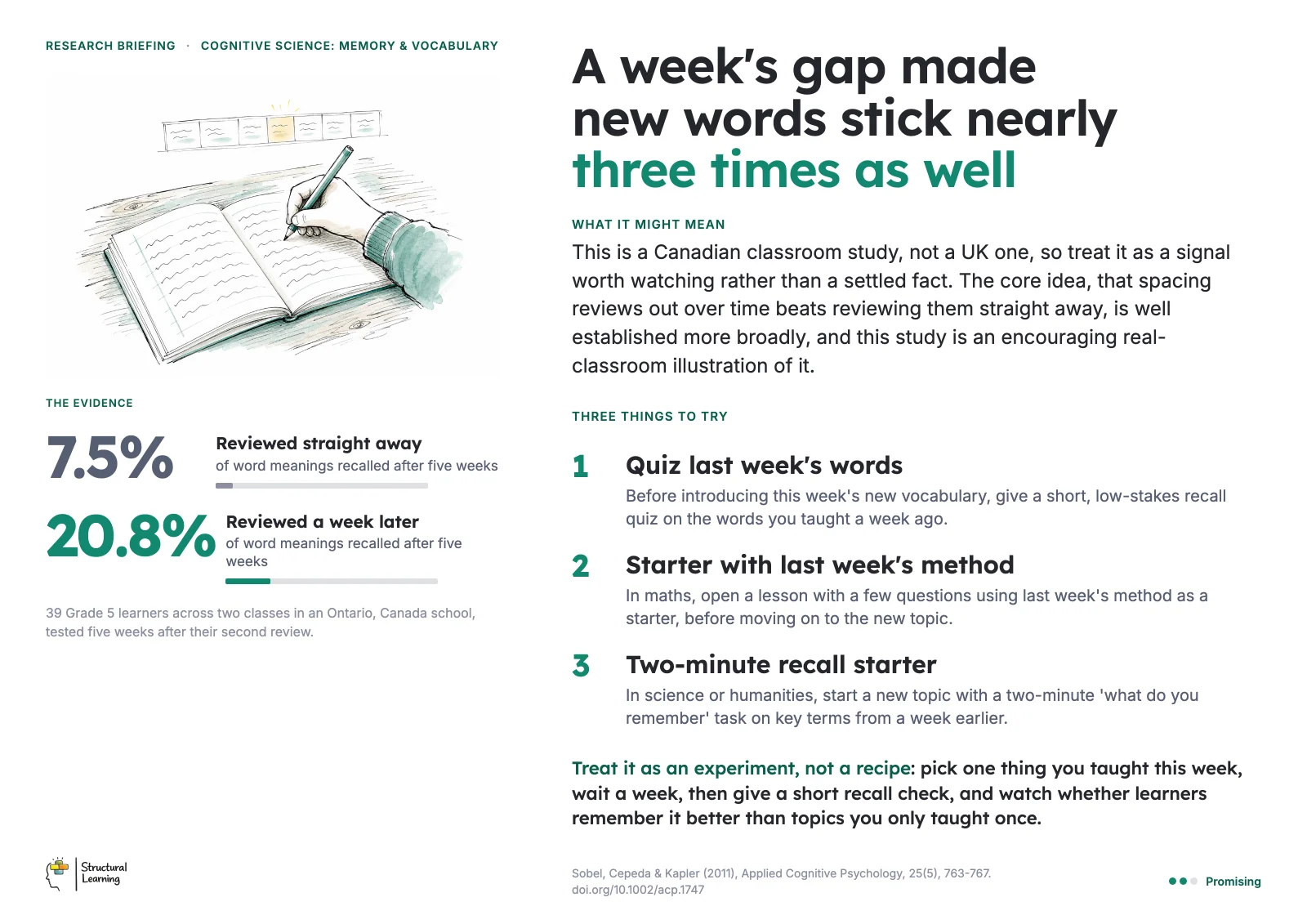
This is a Canadian classroom study, not a UK one, so treat it as a signal worth watching for Years 5 to 6 practice here rather than a settled fact. The core idea, that spacing reviews out over time beats reviewing them straight away, is well established more broadly, and this study is an encouraging real-classroom illustration of it. A useful place to build the habit is alongside spaced practice, using a short retrieval practice quiz as the second look rather than a straight re-teach.
Treat it as an experiment, not a recipe: pick one thing you taught this week, wait about a week, then give a short recall check before moving on, and watch whether learners remember it better a few weeks from now than topics you only ever covered once.
Promising. This is a real, teacher-delivered classroom study with a sound design and a statistically reliable, medium-sized effect, but it is small and single-site: 39 learners in two classes at one Ontario school. It tested vocabulary only, so it does not tell us whether the same one-week gap works as well for maths methods or science ideas, and it compared only one gap, almost immediate versus a week, so we do not know whether two days or two weeks would work better or worse. The wider idea that spacing improves memory is well established across a much larger body of research; treat this specific result as encouraging and worth testing with your own classes, not as proof that it transfers automatically to every subject.
Sobel, H. S., Cepeda, N. J., & Kapler, I. V. (2011). Spacing effects in real-world classroom vocabulary learning. Applied Cognitive Psychology, 25(5), 763-767.
Structural Learning helps teachers turn findings like this into planned, visible thinking in the classroom. Open a free account and try it with your next lesson.
Open a free account →Made by the Structural Learning Evidence Engine. Every claim is traced to the source above and independently verified. See more briefings →