Updated on
January 22, 2026
Computational Thinking
|
July 28, 2023
Explore the power of computational thinking! Learn how it enhances problem-solving, boosts critical thinking, and prepares you for the future workforce.


Updated on
January 22, 2026
|
July 28, 2023
Explore the power of computational thinking! Learn how it enhances problem-solving, boosts critical thinking, and prepares you for the future workforce.
Computational thinking is the mental process of formulating concepts with enough clarity, and in a systematic enough way, that one can tell a computer how to do them. This skill, which is increasingly being recognized as foundational, equips individuals with the ability to approach and solve problems in a logical and systematic manner.
| Pillar | Definition | Example in Computing | Example in Other Subjects |
|---|---|---|---|
| Decomposition | Breaking down complex problems into smaller, manageable parts | Breaking a program into functions and modules | Writing: Outlining an essay into introduction, body paragraphs, conclusion Math: Solving multi-step word problems one step at a time |
| Pattern Recognition | Identifying similarities, trends, and regularities in data or problems | Recognizing repeated code that can become a function | Science: Observing trends in experimental data History: Identifying recurring themes across different events |
| Abstraction | Focusing on important information while ignoring irrelevant details | Creating variables to represent complex data; using APIs without knowing internal workings | Art: Representing objects with simplified shapes Geography: Using maps that show only relevant features |
| Algorithms | Creating step-by-step instructions to solve a problem | Writing pseudocode or flowcharts before coding | Cooking: Following a recipe Math: Using the order of operations (PEMDAS) |
It involves breaking down complex problems into smaller, more manageable parts, abstracting these parts into forms that can be computed, and then using computational tools to compute the solutions.

The integration of computational thinking into education has been found to have significant benefits. For one, it promotes critical thinking and problem-solving skills, equipping learners with the ability to analyze and solve real-world problems more effectively.
This is particularly valuable in today's highly digitized and connected world, where the ability to understand and manipulate digital systems is increasingly important.
Moreover, computational thinking has a significant impact on future employment opportunities. As technology continues to advance, the demand for individuals with computational thinking skills is growing in various industries. From software development to data analysis, computational thinkers are sought after for their ability to tackle complex problems and develop innovative solutions.
In conclusion, computational thinking is a valuable skill with numerous benefits. By promoting critical thinking and problem-solving skills, it not only enhances an individual's ability to approach and solve problems, but also opens up opportunities for advancement in the increasingly digital job market.
Key Insights:
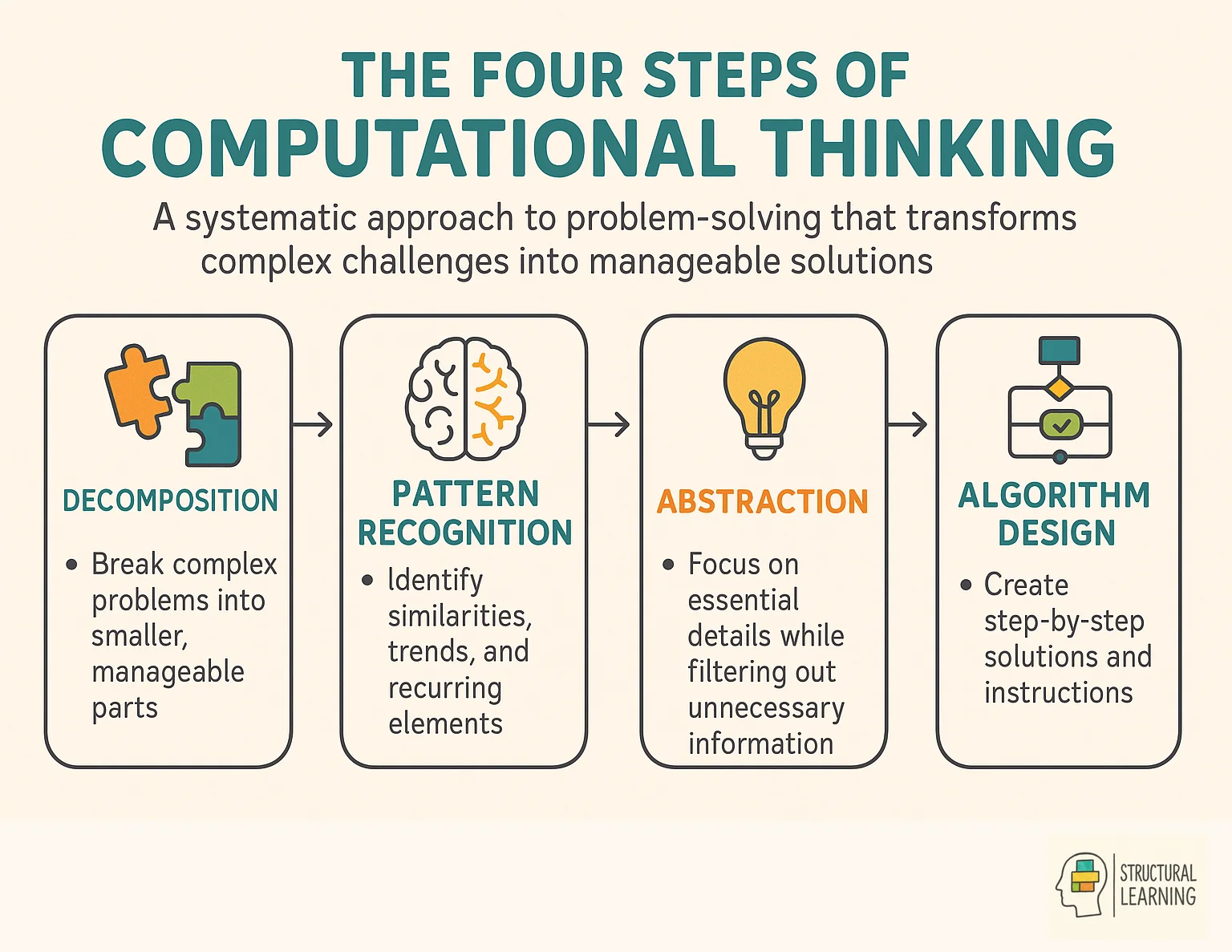
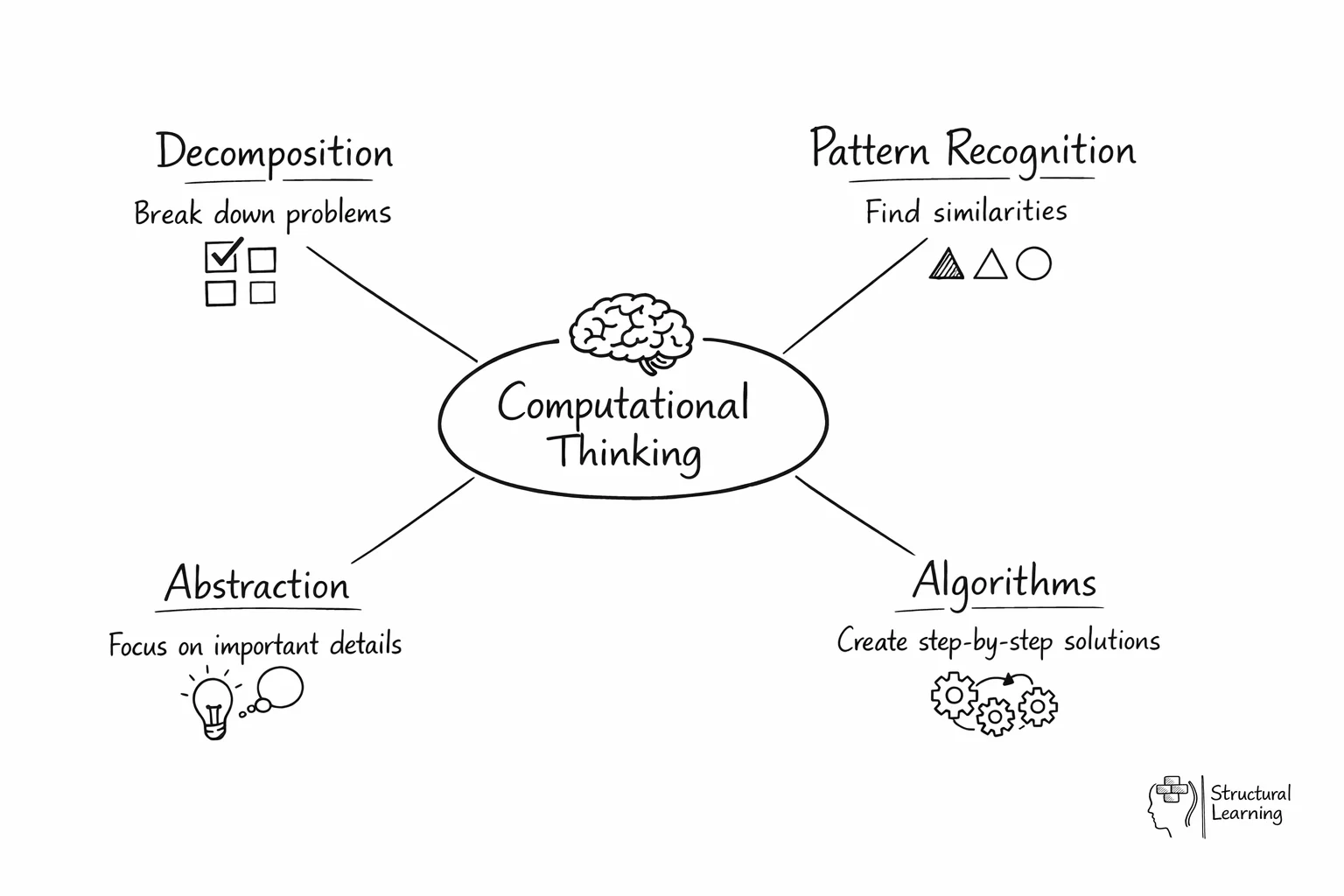
The four main components of computational thinking are decomposition, pattern recognition, abstraction, and algorithms. Decomposition involves breaking complex problems into smaller, manageable parts, while pattern recognition identifies similarities and trends. Abstraction focuses on essential details while algorithms create step-by-step solutions to problems.

Computational thinking is a problem-solving mindset that involves applying key concepts and strategies to approach complex problems in a logical and systematic manner. This approach is not limited to computer science or programming; it can be applied to various aspects of our lives.
Computational thinking encompasses four cornerstones that form the foundation of this approach: decomposition, pattern recognition, abstraction, and algorithm design.
By understanding and utilizing these cornerstones, individuals can develop a deeper understanding of problem-solving and enhance their ability to analyze and tackle challenging tasks. In this article, we will explore each of these cornerstones in detail and discuss how they contribute to the development of computational thinking skills.
Decomposition is a fundamental concept in computational thinking that involves breaking down complex problems into smaller, more manageable parts. It is a problem-solving approach that allows individuals to tackle intricate tasks by dividing them into simpler subtasks.
By employing decomposition in computational thinking, individuals can better understand complex problems and find efficient solutions. Breaking down a larger problem into smaller parts enables them to focus on addressing each component individually, making it easier to manage and solve the overall problem.
This process also helps in identifying patterns and relationships among the smaller parts, leading to a deeper understanding of the problem as a whole.
Decomposition plays a crucial role in problem-solving as it enhances critical thinking skills and develops effective strategies. When faced with a complex problem, decomposition allows individuals to prioritize and allocate their time effectively. By dividing the problem into smaller parts, they can allocate time to address each subtask based on its importance and urgency.
Another benefit of decomposition is the opportunity it provides for delegation and collaboration. Breaking down a complex problem into smaller parts enables individuals to distribute the AI tools to reduce workload among a team, improving efficiency and productivity.
It also fosters teamwork and communication skills as team members work together to solve the problem collectively.
Decomposition is a fundamental component of computational thinking and problem-solving. By breaking down complex problems into smaller, more manageable parts, individuals can develop a deeper understanding of the problem and approach it more effectively.
Decomposition enhances critical thinking, time management, delegation, and collaboration skills, making it an essential skill for problem-solving in various domains.
Pattern recognition is a fundamental aspect of computational thinking and plays a crucial role in problem-solving. It involves the ability to identify similarities and differences in the details of a problem, allowing individuals to simplify complex problems by focusing on the underlying patterns.
The ability to recognize patterns is vital because it helps individuals break down a problem into smaller, more manageable parts. By identifying similarities across different components of a problem, individuals can apply a single solution to multiple instances, saving time and effort. Similarly, recognizing differences between components helps individuals understand the unique aspects of each part and tailor specific solutions accordingly.
Practical activities are an effective way to develop pattern recognition skills. Solving puzzles, participating in escape rooms, or even playing strategy games can help individuals practice identifying recurring patterns or unique elements. These activities provide an opportunity to apply pattern recognition skills in a fun and engaging context, honing problem-solving abilities in the process.
Pattern recognition is an essential aspect of computational thinking and problem-solving. By identifying similarities and differences in the details of a problem, individuals can simplify complex problems and find efficient solutions. Engaging in activities that promote pattern recognition can further enhance these skills, making problem-solving a more intuitive and effective process.

Abstraction is a fundamental concept in computational thinking that involves extracting the most relevant information from decomposed problems and generalizing it to solve the problem as a whole. It allows individuals to focus on the essential aspects of a problem and disregard irrelevant details that may distract from finding a solution.
In the context of pattern recognition, abstraction plays a crucial role in identifying relevant details and disregarding extraneous information. For example, in an escape room, participants are often presented with a series of clues, some of which are red herrings meant to mislead.
By practicing pattern generalization and abstraction, players can distinguish between relevant and irrelevant details, allowing them to solve the puzzle more efficiently.
Developing abstraction skills can begin at a young age, and hands-on activities are a great way to foster this cognitive ability in younger students. Building projects, for instance, require students to break down a complex structure into smaller components and then generalize the principles learned from each component to create a complete and functional project.
By engaging in activities that encourage abstraction, such as escape rooms or building projects, younger students can develop this crucial computational thinking skill. Abstraction not only helps students in problem-solving but also in understanding complex concepts across various disciplines.
As an essential skill for students in STEM subjects, abstraction empowers individuals to think critically and approach real-world problems with confidence and clarity.
Algorithmic Thinking is a fundamental concept within Computational Thinking that involves defining a step-by-step solution to a problem that can be replicated for a predictable outcome, whether by humans or computers. It is the process of breaking down a complex task into smaller, manageable steps and organizing them in a logical sequence.
In Algorithmic Thinking, emphasis is placed on the design and structure of algorithms. An algorithm is a set of instructions that helps solve a specific problem or accomplish a particular task. These instructions are typically presented in a clear and unambiguous manner, allowing individuals or computers to follow them precisely.
The ability to think algorithmically is vital in the problem-solving process. It enables individuals to approach challenges systematically and methodically. By breaking down a problem into smaller steps, identifying patterns, and identifying the appropriate sequence of actions, algorithmic thinking helps to simplify complex problems. This structured approach enhances efficiency, accuracy, and effectiveness in finding solutions.
Furthermore, algorithm design is crucial in ensuring that the steps of the solution are well-defined, comprehensive, and optimized. A properly designed algorithm accounts for various scenarios, considering potential errors or exceptions and providing contingency plans. This systematic approach to algorithm design guarantees a more reliable and robust problem-solving process.
Algorithmic Thinking is a key aspect of Computational Thinking that involves creating step-by-step solutions with predictable outcomes. It incorporates careful algorithm design to enhance problem-solving efficiency and accuracy, whether executed by humans or computers.
By developing algorithmic thinking skills, individuals can approach challenges in a structured and systematic manner, ultimately leading to more effective problem-solving.

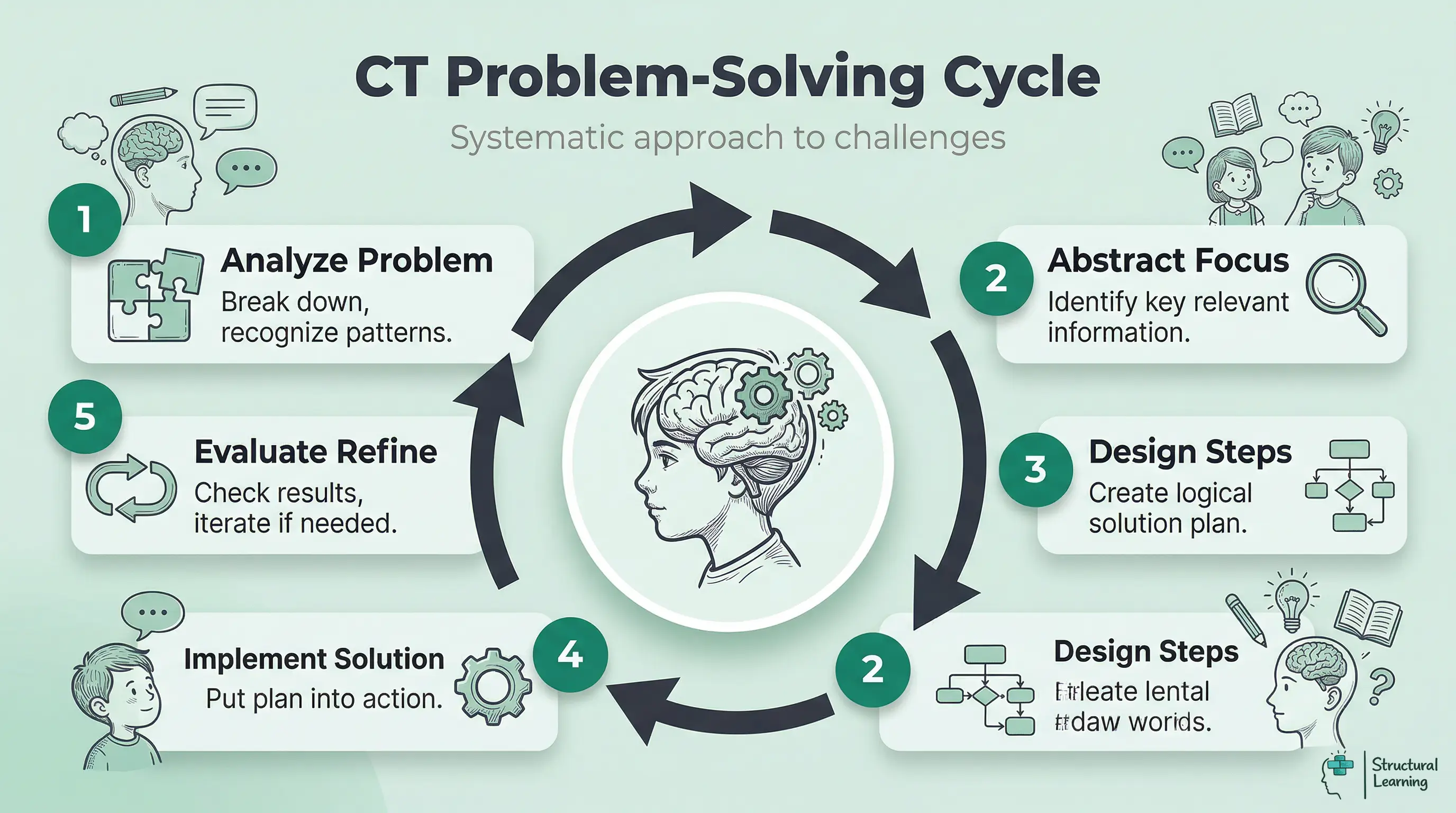
Computational thinking helps with problem solving by providing a systematic framework to break down complex challenges into manageable steps. It enables learners to identify patterns, remove unnecessary details, and create logical sequences of actions to reach solutions. This structured approach makes complex problems more approachable and increases the likelihood of finding effective solutions.
Computational thinking is a powerful tool that can be applied to a variety of problem-solving scenarios, particularly in the workplace. Here are five fictional examples of how computational thinking has been used to solve complex problems:

These examples demonstrate the power of computational thinking in solving real-world problems. As Wing (2006) notes, "Computational thinking involves solving problems, designing systems, and understanding human behavior, by drawing on the concepts fundamental to computer science."
This echoes the sentiment of an expert in the field, who states, "Computational thinking is a fundamental skill for everyone, not just for computer scientists. To reading, writing, and arithmetic, we should add computational thinking to every child’s analytical ability" (Jeannette Wing).
According to a report by the Royal Society, over 60% of new jobs in STEM fields require computational thinking skills and programming experience. This statistic underscores the importance of computational thinking in today's digital age.
Key Insights:

Teachers can use computational thinking across all subjects by incorporating activities like puzzles, building projects, and systematic problem-solving exercises. Students can apply the four-step framework to tackle maths word problems, science investigations, and other complex tasks. This approach transforms everyday classroom activities into powerful learning opportunities that develop critical thinking skills.
Computational thinking has become an integral part of the modern classroom, providing a framework for problem-solving that is applicable across a variety of subjects. Here are seven fictional examples of how computational thinking has been used to enhance learning outcomes in classrooms:
These examples demonstrate the versatility of computational thinking as a teaching tool. It can be applied across a range of subjects to enhance students' understanding and problem-solving skills.
Relevant Statistic: Although specific statistics on computational thinking in classrooms are limited, a report by Google and Gallup (2016) found that 60% of U.S. K-12 schools have incorporated some form of computer science into their curriculum, indicating a growing emphasis on skills like computational thinking.

Real world applications of computational thinking span multiple industries including software development, data analysis, healthcare, and business operations. Employers actively seek professionals with these skills for their ability to tackle complex problems and develop innovative solutions. These thinking patterns are valuable in any field that requires systematic problem-solving and logical decision-making.
As we have seen, computational thinking is not limited to computer science or STEM subjects; it has practical applications in everyday life. By using computational thinking skills, individuals can approach problems and make decisions in a more systematic and logical way.
In work settings, computational thinking can enhance problem-solving skills. For instance, when faced with a complex task, breaking it down into smaller, manageable parts allows for a step-by-step solution. This approach helps to identify patterns, recognize relevant information, and design algorithms to achieve efficient results.
In personal life, computational thinking can be applied in various ways. For example, when organizing daily schedules or planning events, breaking down tasks into smaller steps can ensure smooth execution. Computational thinking also aids in decision-making processes by considering various factors, analyzing pros and cons, and making informed choices.
Furthermore, computational thinking can be used in everyday problem-solving scenarios. When confronted with a household issue, such as troubleshooting a malfunctioning appliance, individuals can apply computational thinking principles to identify the problem's root cause, isolate relevant details, and devise a solution.
The real-life applications of computational thinking are vast and diverse. By utilizing problem-solving skills and applying computational thinking, individuals can enhance their everyday lives and make more logical and informed decisions.

Computational thinking is not just a skill for computer scientists; it's a skill that every member of the future workforce will need to have. Here are seven ways computational thinking might change the way we work in the future:
According to a study on Education 4.0, the development of computational thinking skills is a key component of preparing students for the 21st-century workforce. As technology continues to advance, the demand for individuals with computational thinking skills is growing in various industries.

Key research papers demonstrate that computational thinking integration significantly improves critical thinking and problem-solving skills in learners. Studies show that students who learn computational thinking are better equipped to analyze and solve real-world problems effectively. Research consistently supports its value in preparing students for future employment opportunities in our increasingly digital world.
The reviewed studies highlight the critical role of computational thinking in education. Integrating CT concepts into teacher education, developing effective assessment tools, and embedding CT skills in STEM-driven curricula are essential strategies for enhancing students' problem-solving abilities and preparing them for a digital society.
1. Computational Thinking in Elementary and Secondary Teacher Education
This study highlights the importance of computational thinking (CT) in teacher education. It demonstrates how introducing CT modules can effectively enhance preservice teachers' understanding of CT concepts, equipping them to integrate these concepts into their teaching (Yadav, Mayfield, Zhou, Hambrusch, & Korb, 2014).
2. Computational Thinking Education: Issues and Challenges
This paper discusses the growing emphasis on computational thinking in education, focusing on algorithmic thinking, problem-solving, and logical reasoning. It reviews contemporary educational initiatives and the challenges of integrating CT into curricula to support the development of essential digital competences (Angeli & Giannakos, 2020).
3. Assessing Computational Thinking Across the Curriculum
This study addresses the need for effective assessment tools for computational thinking. It defines CT within the Ontario Elementary School curriculum and explores strategies for embedding CT concepts into various subjects, emphasizing the importance of problem-solving abilities (Mueller, Beckett, Hennessey, & Shodiev, 2017).
4. Computational Thinking in Secondary and Higher Education
The research examines the role of algorithms in computational thinking and evaluates the CT skills of secondary school and university students. It provides insights into the cognitive skills that need improvement to enhance the application of knowledge in practical, real-life situations (Harangus & Kátai, 2020).
5. Integration of Computational Thinking Skills in STEM-Driven Computer Science Education
This paper explores the integration of CT skills into computer science education through STEM principles. It presents a curriculum for high school programming that supports the development of CT skills and provides evidence of the approach's effectiveness in real educational environments (Burbaite, Drasute, & Stuikys, 2018).
Computational thinking is the mental process of formulating concepts clearly and systematically enough that you can tell a computer how to execute them. Unlike coding, which focuses on writing code, computational thinking is about developing problem-solving approaches that can be applied across all subjects, from maths word problems to science investigations.
Teachers can embed decomposition, pattern recognition, abstraction, and algorithms into everyday classroom activities like puzzles and building projects. For example, breaking down a maths word problem uses decomposition, whilst identifying trends in historical events applies pattern recognition across the curriculum.
Practical activities include solving puzzles, participating in escape rooms, and playing strategy games to develop pattern recognition skills. Building projects and structured problem-solving tasks help students practice decomposition and algorithm design in an engaging, age-appropriate context.
Computational thinking provides a systematic framework that helps struggling learners break down overwhelming tasks into smaller, manageable parts through decomposition. This approach allows them to focus on one component at a time, making complex problems more accessible and building confidence through step-by-step success.
Students with computational thinking skills are increasingly sought after across various industries, from software development to data analysis, due to their ability to tackle complex problems systematically. These skills are particularly valuable in today's digitised world, where employers desperately seek individuals who can develop innovative solutions and understand digital systems.
Parents can encourage computational thinking through everyday activities like cooking (following recipes as algorithms), organising household tasks (decomposition), and playing board games or puzzles (pattern recognition). These activities naturally develop the four core components whilst building critical thinking and problem-solving abilities in familiar contexts.
These peer-reviewed studies provide deeper insights into computational thinking and its application in educational settings.
A critical review of literature on “unplugged” pedagogies in K-12 computer science and computational thinking education View study ↗120 citations
Huang et al. (2020)
This paper critically examines research on 'unplugged' teaching methods in K-12 computer science and computational thinking education, where students learn computing concepts without using computers or digital devices. The research is particularly valuable for teachers as it evaluates the effectiveness of Computer Science Unplugged approaches, which can make computational thinking accessible in classrooms with limited technology resources. Understanding these unplugged pedagogies helps educators develop inclusive computational thinking instruction for underrepresented students.
Computational Thinking Education View study ↗101 citations
Kong et al. (2019)
This comprehensive overview traces the historical development of Computational Thinking Education from Seymour Papert's early work on computational thinking to Jeanette Wing's influential arguments for its widespread adoption. The chapter serves as an essential foundation for teachers by providing historical context and theoretical frameworks that shaped current computational thinking education practices. Understanding this evolution helps educators grasp the pedagogical foundations underlying modern computational thinking curricula and teaching approaches.
The Code-Centric Nature of Computational Thinking Education: A Review of Trends and Issues in Computational Thinking Education Research View study ↗47 citations
Kite et al. (2020)
This review examines current trends in computational thinking education research and identifies a problematic focus on coding and programming rather than broader computational thinking concepts. The research is crucial for teachers as it highlights the need to move beyond code-centric approaches when integrating computational thinking into core curricula across subjects. Understanding this critique helps educators develop more comprehensive computational thinking instruction that emphasizes problem-solving and logical reasoning skills applicable beyond programming.
Computational thinking in STEM education: current state-of-the-art and future research directions View study ↗19 citations
Tariq et al. (2025)
This study analyzes current pedagogical approaches for integrating computational thinking into STEM education and identifies future research directions in response to digital transformation demands. The research provides teachers with insights into effective strategies for incorporating computational thinking across science, technology, engineering, and mathematics curricula. Understanding these approaches helps educators develop high-level computational thinking skills that prepare students for complex technological environments.
Effects of Combining Different Collaborative Learning Strategies with Problem-Based Learning in a Flipped Classroom on Program Language Learning View study ↗45 citations
Chang et al. (2022)
This study investigates how combining problem-based learning with collaborative strategies in flipped classrooms can improve programming language learning outcomes and student motivation. While focused on programming instruction, the research offers valuable insights for teachers about effective pedagogical combinations that can enhance computational thinking education. The findings on collaborative problem-solving approaches can inform broader computational thinking instruction beyond just coding activities.
Computational thinking is the mental process of formulating concepts with enough clarity, and in a systematic enough way, that one can tell a computer how to do them. This skill, which is increasingly being recognized as foundational, equips individuals with the ability to approach and solve problems in a logical and systematic manner.
| Pillar | Definition | Example in Computing | Example in Other Subjects |
|---|---|---|---|
| Decomposition | Breaking down complex problems into smaller, manageable parts | Breaking a program into functions and modules | Writing: Outlining an essay into introduction, body paragraphs, conclusion Math: Solving multi-step word problems one step at a time |
| Pattern Recognition | Identifying similarities, trends, and regularities in data or problems | Recognizing repeated code that can become a function | Science: Observing trends in experimental data History: Identifying recurring themes across different events |
| Abstraction | Focusing on important information while ignoring irrelevant details | Creating variables to represent complex data; using APIs without knowing internal workings | Art: Representing objects with simplified shapes Geography: Using maps that show only relevant features |
| Algorithms | Creating step-by-step instructions to solve a problem | Writing pseudocode or flowcharts before coding | Cooking: Following a recipe Math: Using the order of operations (PEMDAS) |
It involves breaking down complex problems into smaller, more manageable parts, abstracting these parts into forms that can be computed, and then using computational tools to compute the solutions.

The integration of computational thinking into education has been found to have significant benefits. For one, it promotes critical thinking and problem-solving skills, equipping learners with the ability to analyze and solve real-world problems more effectively.
This is particularly valuable in today's highly digitized and connected world, where the ability to understand and manipulate digital systems is increasingly important.
Moreover, computational thinking has a significant impact on future employment opportunities. As technology continues to advance, the demand for individuals with computational thinking skills is growing in various industries. From software development to data analysis, computational thinkers are sought after for their ability to tackle complex problems and develop innovative solutions.
In conclusion, computational thinking is a valuable skill with numerous benefits. By promoting critical thinking and problem-solving skills, it not only enhances an individual's ability to approach and solve problems, but also opens up opportunities for advancement in the increasingly digital job market.
Key Insights:
The four main components of computational thinking are decomposition, pattern recognition, abstraction, and algorithms. Decomposition involves breaking complex problems into smaller, manageable parts, while pattern recognition identifies similarities and trends. Abstraction focuses on essential details while algorithms create step-by-step solutions to problems.

Computational thinking is a problem-solving mindset that involves applying key concepts and strategies to approach complex problems in a logical and systematic manner. This approach is not limited to computer science or programming; it can be applied to various aspects of our lives.
Computational thinking encompasses four cornerstones that form the foundation of this approach: decomposition, pattern recognition, abstraction, and algorithm design.
By understanding and utilizing these cornerstones, individuals can develop a deeper understanding of problem-solving and enhance their ability to analyze and tackle challenging tasks. In this article, we will explore each of these cornerstones in detail and discuss how they contribute to the development of computational thinking skills.
Decomposition is a fundamental concept in computational thinking that involves breaking down complex problems into smaller, more manageable parts. It is a problem-solving approach that allows individuals to tackle intricate tasks by dividing them into simpler subtasks.
By employing decomposition in computational thinking, individuals can better understand complex problems and find efficient solutions. Breaking down a larger problem into smaller parts enables them to focus on addressing each component individually, making it easier to manage and solve the overall problem.
This process also helps in identifying patterns and relationships among the smaller parts, leading to a deeper understanding of the problem as a whole.
Decomposition plays a crucial role in problem-solving as it enhances critical thinking skills and develops effective strategies. When faced with a complex problem, decomposition allows individuals to prioritize and allocate their time effectively. By dividing the problem into smaller parts, they can allocate time to address each subtask based on its importance and urgency.
Another benefit of decomposition is the opportunity it provides for delegation and collaboration. Breaking down a complex problem into smaller parts enables individuals to distribute the AI tools to reduce workload among a team, improving efficiency and productivity.
It also fosters teamwork and communication skills as team members work together to solve the problem collectively.
Decomposition is a fundamental component of computational thinking and problem-solving. By breaking down complex problems into smaller, more manageable parts, individuals can develop a deeper understanding of the problem and approach it more effectively.
Decomposition enhances critical thinking, time management, delegation, and collaboration skills, making it an essential skill for problem-solving in various domains.
Pattern recognition is a fundamental aspect of computational thinking and plays a crucial role in problem-solving. It involves the ability to identify similarities and differences in the details of a problem, allowing individuals to simplify complex problems by focusing on the underlying patterns.
The ability to recognize patterns is vital because it helps individuals break down a problem into smaller, more manageable parts. By identifying similarities across different components of a problem, individuals can apply a single solution to multiple instances, saving time and effort. Similarly, recognizing differences between components helps individuals understand the unique aspects of each part and tailor specific solutions accordingly.
Practical activities are an effective way to develop pattern recognition skills. Solving puzzles, participating in escape rooms, or even playing strategy games can help individuals practice identifying recurring patterns or unique elements. These activities provide an opportunity to apply pattern recognition skills in a fun and engaging context, honing problem-solving abilities in the process.
Pattern recognition is an essential aspect of computational thinking and problem-solving. By identifying similarities and differences in the details of a problem, individuals can simplify complex problems and find efficient solutions. Engaging in activities that promote pattern recognition can further enhance these skills, making problem-solving a more intuitive and effective process.

Abstraction is a fundamental concept in computational thinking that involves extracting the most relevant information from decomposed problems and generalizing it to solve the problem as a whole. It allows individuals to focus on the essential aspects of a problem and disregard irrelevant details that may distract from finding a solution.
In the context of pattern recognition, abstraction plays a crucial role in identifying relevant details and disregarding extraneous information. For example, in an escape room, participants are often presented with a series of clues, some of which are red herrings meant to mislead.
By practicing pattern generalization and abstraction, players can distinguish between relevant and irrelevant details, allowing them to solve the puzzle more efficiently.
Developing abstraction skills can begin at a young age, and hands-on activities are a great way to foster this cognitive ability in younger students. Building projects, for instance, require students to break down a complex structure into smaller components and then generalize the principles learned from each component to create a complete and functional project.
By engaging in activities that encourage abstraction, such as escape rooms or building projects, younger students can develop this crucial computational thinking skill. Abstraction not only helps students in problem-solving but also in understanding complex concepts across various disciplines.
As an essential skill for students in STEM subjects, abstraction empowers individuals to think critically and approach real-world problems with confidence and clarity.
Algorithmic Thinking is a fundamental concept within Computational Thinking that involves defining a step-by-step solution to a problem that can be replicated for a predictable outcome, whether by humans or computers. It is the process of breaking down a complex task into smaller, manageable steps and organizing them in a logical sequence.
In Algorithmic Thinking, emphasis is placed on the design and structure of algorithms. An algorithm is a set of instructions that helps solve a specific problem or accomplish a particular task. These instructions are typically presented in a clear and unambiguous manner, allowing individuals or computers to follow them precisely.
The ability to think algorithmically is vital in the problem-solving process. It enables individuals to approach challenges systematically and methodically. By breaking down a problem into smaller steps, identifying patterns, and identifying the appropriate sequence of actions, algorithmic thinking helps to simplify complex problems. This structured approach enhances efficiency, accuracy, and effectiveness in finding solutions.
Furthermore, algorithm design is crucial in ensuring that the steps of the solution are well-defined, comprehensive, and optimized. A properly designed algorithm accounts for various scenarios, considering potential errors or exceptions and providing contingency plans. This systematic approach to algorithm design guarantees a more reliable and robust problem-solving process.
Algorithmic Thinking is a key aspect of Computational Thinking that involves creating step-by-step solutions with predictable outcomes. It incorporates careful algorithm design to enhance problem-solving efficiency and accuracy, whether executed by humans or computers.
By developing algorithmic thinking skills, individuals can approach challenges in a structured and systematic manner, ultimately leading to more effective problem-solving.

Computational thinking helps with problem solving by providing a systematic framework to break down complex challenges into manageable steps. It enables learners to identify patterns, remove unnecessary details, and create logical sequences of actions to reach solutions. This structured approach makes complex problems more approachable and increases the likelihood of finding effective solutions.
Computational thinking is a powerful tool that can be applied to a variety of problem-solving scenarios, particularly in the workplace. Here are five fictional examples of how computational thinking has been used to solve complex problems:

These examples demonstrate the power of computational thinking in solving real-world problems. As Wing (2006) notes, "Computational thinking involves solving problems, designing systems, and understanding human behavior, by drawing on the concepts fundamental to computer science."
This echoes the sentiment of an expert in the field, who states, "Computational thinking is a fundamental skill for everyone, not just for computer scientists. To reading, writing, and arithmetic, we should add computational thinking to every child’s analytical ability" (Jeannette Wing).
According to a report by the Royal Society, over 60% of new jobs in STEM fields require computational thinking skills and programming experience. This statistic underscores the importance of computational thinking in today's digital age.
Key Insights:

Teachers can use computational thinking across all subjects by incorporating activities like puzzles, building projects, and systematic problem-solving exercises. Students can apply the four-step framework to tackle maths word problems, science investigations, and other complex tasks. This approach transforms everyday classroom activities into powerful learning opportunities that develop critical thinking skills.
Computational thinking has become an integral part of the modern classroom, providing a framework for problem-solving that is applicable across a variety of subjects. Here are seven fictional examples of how computational thinking has been used to enhance learning outcomes in classrooms:
These examples demonstrate the versatility of computational thinking as a teaching tool. It can be applied across a range of subjects to enhance students' understanding and problem-solving skills.
Relevant Statistic: Although specific statistics on computational thinking in classrooms are limited, a report by Google and Gallup (2016) found that 60% of U.S. K-12 schools have incorporated some form of computer science into their curriculum, indicating a growing emphasis on skills like computational thinking.

Real world applications of computational thinking span multiple industries including software development, data analysis, healthcare, and business operations. Employers actively seek professionals with these skills for their ability to tackle complex problems and develop innovative solutions. These thinking patterns are valuable in any field that requires systematic problem-solving and logical decision-making.
As we have seen, computational thinking is not limited to computer science or STEM subjects; it has practical applications in everyday life. By using computational thinking skills, individuals can approach problems and make decisions in a more systematic and logical way.
In work settings, computational thinking can enhance problem-solving skills. For instance, when faced with a complex task, breaking it down into smaller, manageable parts allows for a step-by-step solution. This approach helps to identify patterns, recognize relevant information, and design algorithms to achieve efficient results.
In personal life, computational thinking can be applied in various ways. For example, when organizing daily schedules or planning events, breaking down tasks into smaller steps can ensure smooth execution. Computational thinking also aids in decision-making processes by considering various factors, analyzing pros and cons, and making informed choices.
Furthermore, computational thinking can be used in everyday problem-solving scenarios. When confronted with a household issue, such as troubleshooting a malfunctioning appliance, individuals can apply computational thinking principles to identify the problem's root cause, isolate relevant details, and devise a solution.
The real-life applications of computational thinking are vast and diverse. By utilizing problem-solving skills and applying computational thinking, individuals can enhance their everyday lives and make more logical and informed decisions.

Computational thinking is not just a skill for computer scientists; it's a skill that every member of the future workforce will need to have. Here are seven ways computational thinking might change the way we work in the future:
According to a study on Education 4.0, the development of computational thinking skills is a key component of preparing students for the 21st-century workforce. As technology continues to advance, the demand for individuals with computational thinking skills is growing in various industries.

Key research papers demonstrate that computational thinking integration significantly improves critical thinking and problem-solving skills in learners. Studies show that students who learn computational thinking are better equipped to analyze and solve real-world problems effectively. Research consistently supports its value in preparing students for future employment opportunities in our increasingly digital world.
The reviewed studies highlight the critical role of computational thinking in education. Integrating CT concepts into teacher education, developing effective assessment tools, and embedding CT skills in STEM-driven curricula are essential strategies for enhancing students' problem-solving abilities and preparing them for a digital society.
1. Computational Thinking in Elementary and Secondary Teacher Education
This study highlights the importance of computational thinking (CT) in teacher education. It demonstrates how introducing CT modules can effectively enhance preservice teachers' understanding of CT concepts, equipping them to integrate these concepts into their teaching (Yadav, Mayfield, Zhou, Hambrusch, & Korb, 2014).
2. Computational Thinking Education: Issues and Challenges
This paper discusses the growing emphasis on computational thinking in education, focusing on algorithmic thinking, problem-solving, and logical reasoning. It reviews contemporary educational initiatives and the challenges of integrating CT into curricula to support the development of essential digital competences (Angeli & Giannakos, 2020).
3. Assessing Computational Thinking Across the Curriculum
This study addresses the need for effective assessment tools for computational thinking. It defines CT within the Ontario Elementary School curriculum and explores strategies for embedding CT concepts into various subjects, emphasizing the importance of problem-solving abilities (Mueller, Beckett, Hennessey, & Shodiev, 2017).
4. Computational Thinking in Secondary and Higher Education
The research examines the role of algorithms in computational thinking and evaluates the CT skills of secondary school and university students. It provides insights into the cognitive skills that need improvement to enhance the application of knowledge in practical, real-life situations (Harangus & Kátai, 2020).
5. Integration of Computational Thinking Skills in STEM-Driven Computer Science Education
This paper explores the integration of CT skills into computer science education through STEM principles. It presents a curriculum for high school programming that supports the development of CT skills and provides evidence of the approach's effectiveness in real educational environments (Burbaite, Drasute, & Stuikys, 2018).
Computational thinking is the mental process of formulating concepts clearly and systematically enough that you can tell a computer how to execute them. Unlike coding, which focuses on writing code, computational thinking is about developing problem-solving approaches that can be applied across all subjects, from maths word problems to science investigations.
Teachers can embed decomposition, pattern recognition, abstraction, and algorithms into everyday classroom activities like puzzles and building projects. For example, breaking down a maths word problem uses decomposition, whilst identifying trends in historical events applies pattern recognition across the curriculum.
Practical activities include solving puzzles, participating in escape rooms, and playing strategy games to develop pattern recognition skills. Building projects and structured problem-solving tasks help students practice decomposition and algorithm design in an engaging, age-appropriate context.
Computational thinking provides a systematic framework that helps struggling learners break down overwhelming tasks into smaller, manageable parts through decomposition. This approach allows them to focus on one component at a time, making complex problems more accessible and building confidence through step-by-step success.
Students with computational thinking skills are increasingly sought after across various industries, from software development to data analysis, due to their ability to tackle complex problems systematically. These skills are particularly valuable in today's digitised world, where employers desperately seek individuals who can develop innovative solutions and understand digital systems.
Parents can encourage computational thinking through everyday activities like cooking (following recipes as algorithms), organising household tasks (decomposition), and playing board games or puzzles (pattern recognition). These activities naturally develop the four core components whilst building critical thinking and problem-solving abilities in familiar contexts.
These peer-reviewed studies provide deeper insights into computational thinking and its application in educational settings.
A critical review of literature on “unplugged” pedagogies in K-12 computer science and computational thinking education View study ↗120 citations
Huang et al. (2020)
This paper critically examines research on 'unplugged' teaching methods in K-12 computer science and computational thinking education, where students learn computing concepts without using computers or digital devices. The research is particularly valuable for teachers as it evaluates the effectiveness of Computer Science Unplugged approaches, which can make computational thinking accessible in classrooms with limited technology resources. Understanding these unplugged pedagogies helps educators develop inclusive computational thinking instruction for underrepresented students.
Computational Thinking Education View study ↗101 citations
Kong et al. (2019)
This comprehensive overview traces the historical development of Computational Thinking Education from Seymour Papert's early work on computational thinking to Jeanette Wing's influential arguments for its widespread adoption. The chapter serves as an essential foundation for teachers by providing historical context and theoretical frameworks that shaped current computational thinking education practices. Understanding this evolution helps educators grasp the pedagogical foundations underlying modern computational thinking curricula and teaching approaches.
The Code-Centric Nature of Computational Thinking Education: A Review of Trends and Issues in Computational Thinking Education Research View study ↗47 citations
Kite et al. (2020)
This review examines current trends in computational thinking education research and identifies a problematic focus on coding and programming rather than broader computational thinking concepts. The research is crucial for teachers as it highlights the need to move beyond code-centric approaches when integrating computational thinking into core curricula across subjects. Understanding this critique helps educators develop more comprehensive computational thinking instruction that emphasizes problem-solving and logical reasoning skills applicable beyond programming.
Computational thinking in STEM education: current state-of-the-art and future research directions View study ↗19 citations
Tariq et al. (2025)
This study analyzes current pedagogical approaches for integrating computational thinking into STEM education and identifies future research directions in response to digital transformation demands. The research provides teachers with insights into effective strategies for incorporating computational thinking across science, technology, engineering, and mathematics curricula. Understanding these approaches helps educators develop high-level computational thinking skills that prepare students for complex technological environments.
Effects of Combining Different Collaborative Learning Strategies with Problem-Based Learning in a Flipped Classroom on Program Language Learning View study ↗45 citations
Chang et al. (2022)
This study investigates how combining problem-based learning with collaborative strategies in flipped classrooms can improve programming language learning outcomes and student motivation. While focused on programming instruction, the research offers valuable insights for teachers about effective pedagogical combinations that can enhance computational thinking education. The findings on collaborative problem-solving approaches can inform broader computational thinking instruction beyond just coding activities.
{"@context":"https://schema.org","@graph":[{"@type":"Article","@id":"https://www.structural-learning.com/post/computational-thinking#article","headline":"Computational Thinking","description":"Explore the power of computational thinking! Learn how it enhances problem-solving, boosts critical thinking, and prepares you for the future workforce.","datePublished":"2023-07-28T10:36:02.801Z","dateModified":"2026-01-19T12:12:46.188Z","author":{"@type":"Person","name":"Paul Main","url":"https://www.structural-learning.com/team/paulmain","jobTitle":"Founder & Educational Consultant"},"publisher":{"@type":"Organization","name":"Structural Learning","url":"https://www.structural-learning.com","logo":{"@type":"ImageObject","url":"https://cdn.prod.website-files.com/5b69a01ba2e409e5d5e055c6/6040bf0426cb415ba2fc7882_newlogoblue.svg"}},"mainEntityOfPage":{"@type":"WebPage","@id":"https://www.structural-learning.com/post/computational-thinking"},"image":"https://cdn.prod.website-files.com/5b69a01ba2e409501de055d1/69523d735a5a5bf61356f38a_69523d717923951d43c43066_computational-thinking-infographic.webp","wordCount":3868},{"@type":"BreadcrumbList","@id":"https://www.structural-learning.com/post/computational-thinking#breadcrumb","itemListElement":[{"@type":"ListItem","position":1,"name":"Home","item":"https://www.structural-learning.com/"},{"@type":"ListItem","position":2,"name":"Blog","item":"https://www.structural-learning.com/blog"},{"@type":"ListItem","position":3,"name":"Computational Thinking","item":"https://www.structural-learning.com/post/computational-thinking"}]},{"@type":"FAQPage","@id":"https://www.structural-learning.com/post/computational-thinking#faq","mainEntity":[{"@type":"Question","name":"What exactly is computational thinking and how does it differ from coding or programming?","acceptedAnswer":{"@type":"Answer","text":"Computational thinking is the mental process of formulating concepts clearly and systematically enough that you can tell a computer how to execute them. Unlike coding, which focuses on writing code, computational thinking is about developing problem-solving approaches that can be applied across all "}},{"@type":"Question","name":"How can teachers integrate the four components of computational thinking into their existing curriculum without needing specialist computing knowledge?","acceptedAnswer":{"@type":"Answer","text":"Teachers can embed decomposition, pattern recognition, abstraction, and algorithms into everyday classroom activities like puzzles and building projects. For example, breaking down a maths word problem uses decomposition, whilst identifying trends in historical events applies pattern recognition acr"}},{"@type":"Question","name":"What are some practical classroom activities that develop computational thinking skills for different age groups?","acceptedAnswer":{"@type":"Answer","text":"Practical activities include solving puzzles, participating in escape rooms, and playing strategy games to develop pattern recognition skills. Building projects and structured problem-solving tasks help students practice decomposition and algorithm design in an engaging, age-appropriate context."}},{"@type":"Question","name":"How does computational thinking specifically help struggling learners who find complex tasks overwhelming?","acceptedAnswer":{"@type":"Answer","text":"Computational thinking provides a systematic framework that helps struggling learners break down overwhelming tasks into smaller, manageable parts through decomposition. This approach allows them to focus on one component at a time, making complex problems more accessible and building confidence thr"}},{"@type":"Question","name":"What employment benefits will students gain from developing computational thinking skills, and which industries value these abilities?","acceptedAnswer":{"@type":"Answer","text":"Students with computational thinking skills are increasingly sought after across various industries, from software development to data analysis, due to their ability to tackle complex problems systematically. These skills are particularly valuable in today's digitised world, where employers desperat"}}]}]}